
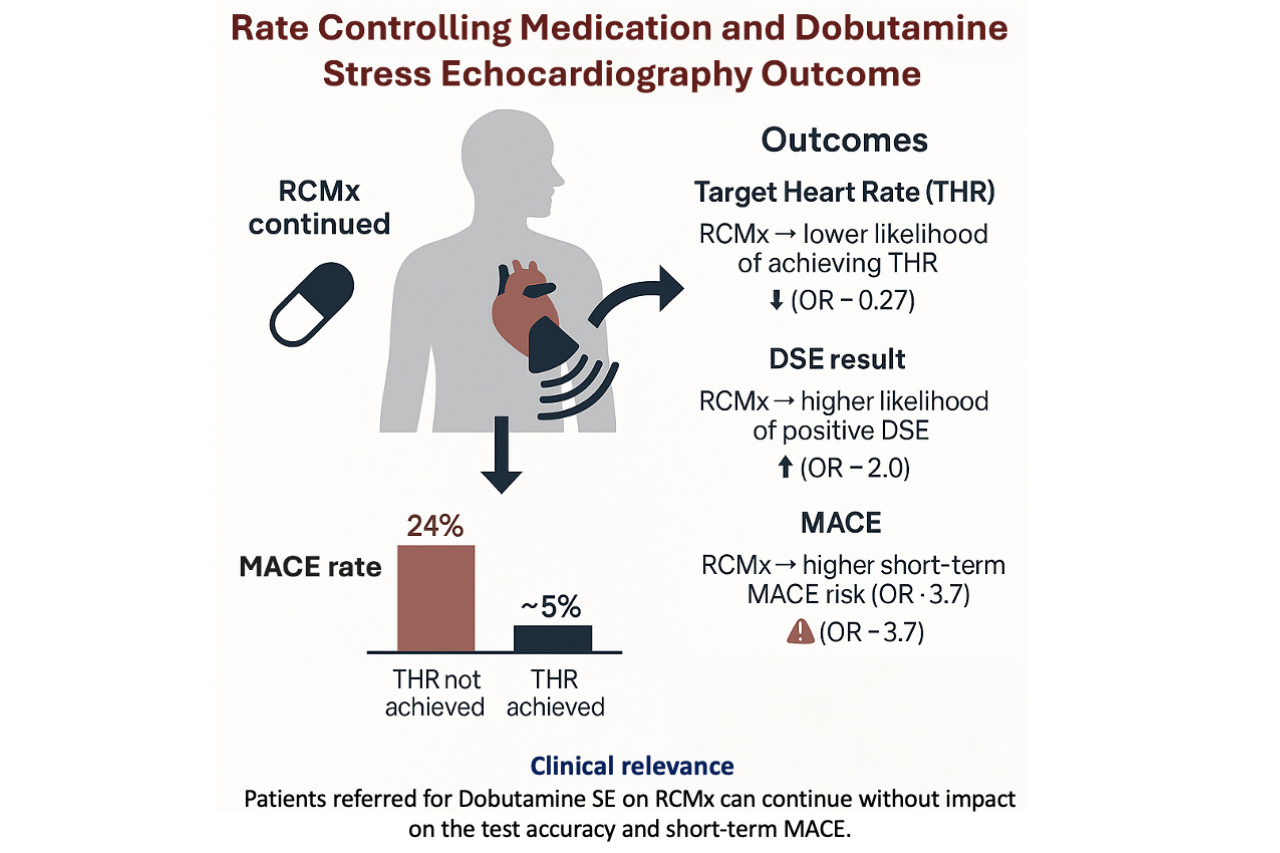
For years, professional guidelines and expert opinions have conflicted on a crucial pre-test instruction: should patients stop taking their rate-controlling medications (RCMx), like beta-blockers, 48 hours before undergoing a stress echocardiography? While conventional wisdom suggests halting these medications improves diagnostic accuracy by making it easier to reach target heart rates, hard evidence has been strikingly absent. This compelling retrospective study flips the script by evaluating 227 real-world patients to determine whether staying on heart-rate medication actually compromises Dobutamine stress echo outcomes or leaves clinicians in the dark regarding long-term cardiovascular risks.
The findings challenge established protocols, revealing that staying on rate-controlling medication does not mask underlying coronary artery disease. In fact, patients who remained on their medication were independently associated with positive stress tests and, crucially, RCMx use and an unachieved target heart rate proved to be powerful predictors of 12-month major adverse cardiovascular events (MACE). If you want to see how these surprising results support a shift toward more convenient, continuous patient care without sacrificing diagnostic or prognostic accuracy, read the full article below.